If you’ve spotted packs of biltong in a gym, at a rugby match, or on the shelves of your local deli and wondered what on earth it is, you’re in the right place. Biltong is one of the world’s oldest and most satisfying snacks — a traditional South African air-dried meat that has taken the UK by storm over the past decade. Rich in protein, packed with flavour, and made with a handful of simple, natural ingredients, it’s the antithesis of the ultra-processed snack foods lining most supermarket aisles.
But biltong is far more than just “dried meat”. It carries centuries of history, a unique production method, and a depth of flavour that surprises almost everyone who tries it for the first time. In this complete beginner’s guide, we’ll walk you through everything you need to know: what biltong actually is, how it’s made, what it tastes like, how it differs from beef jerky, who it’s perfect for, and how to get started with your very first pack.
Biltong: The Basics
Biltong (pronounced bil-tong) is a form of cured, air-dried meat originating from South Africa. The word itself comes from the Dutch “bil” (meaning rump or buttock) and “tong” (meaning strip or tongue) — essentially, a strip of meat. While beef is by far the most common base, biltong can also be made from game meats such as kudu, ostrich, or springbok.
At its core, the process is beautifully simple. Strips of quality beef are marinated in vinegar and seasoned with a blend of coarse salt, cracked black pepper, and ground coriander. The meat is then hung in a cool, dry environment with good airflow and left to air-dry over several days. No cooking. No smoking. No artificial heat. Just time, air, and a recipe that has been refined over more than four centuries.
The result is a tender, intensely savoury snack with a distinctive flavour profile you won’t find in any other dried-meat product. Depending on how long it’s dried, biltong can range from soft and moist (“wet” biltong) to firm and chewy (“dry” biltong) — and both styles have their devoted fans.
A Brief History of Biltong
Biltong’s story begins in the 17th century, when Dutch settlers arrived at the Cape of Good Hope in what is now South Africa. These early colonists — the Voortrekkers — needed a reliable way to preserve meat for long overland journeys into the African interior, where refrigeration was obviously not an option.
Drawing on European curing traditions and indigenous African drying techniques, they developed a method of vinegar-curing and air-drying meat that could last for months without spoiling. The vinegar acted as an antimicrobial agent, the salt drew out moisture, and the dry South African climate provided the perfect natural conditions for curing. Spices like coriander and pepper were added both for flavour and for their preservative properties.
Over the centuries, biltong became woven into the fabric of South African culture. It’s the snack served at every braai (barbecue), every rugby match, every road trip, and every family gathering. It’s a taste of home for millions of South Africans — and increasingly, for the growing community of South African expats in the UK, Australia, and beyond.
Today, biltong has crossed over from a niche expat product into the UK mainstream. You’ll find it in gyms, health-food shops, independent delis, and online stores like Billy Tong. And as more Brits discover it, the question keeps coming up: what exactly makes this stuff so special?
How Is Biltong Made?
Understanding how biltong is made helps explain why it tastes and feels so different from other dried-meat snacks. Here’s a simplified overview of the traditional process:
1. Selecting the Meat
High-quality beef is essential. The best biltong is typically made from lean cuts such as silverside or topside, which have the right balance of muscle and fat to produce a tender, flavourful end product.
2. Slicing
The meat is cut into thick strips, usually following the grain of the muscle. The thickness of the strips determines the final texture — thicker cuts produce softer, more moist biltong, while thinner cuts dry out more and become firmer.
3. Marinating
The strips are soaked or coated in vinegar (traditionally malt or cider vinegar), which helps preserve the meat and gives biltong part of its distinctive tangy edge. They’re then generously seasoned with coarse salt, cracked black pepper, and toasted coriander seeds. Some recipes add a touch of brown sugar, Worcestershire sauce, or chilli for extra depth.
4. Air-Drying
This is the step that sets biltong apart from almost every other dried-meat product. The seasoned strips are hung on hooks or rods in a well-ventilated drying room — no oven, no smoker, no dehydrator. Cool, circulating air slowly draws the moisture out over three to seven days (sometimes longer), depending on the desired dryness. This cold-drying process preserves more of the meat’s natural nutrients and creates that unmistakable biltong texture: tender on the inside with a flavour-packed crust of spice on the outside.
5. Slicing and Packing
Once dried to the desired level, the biltong is sliced (or left in whole sticks for hand-tearing) and packed for sale. At Billy Tong, every batch is checked for quality before it reaches the shelf or your doorstep.
What Does Biltong Taste Like?
This is the question everyone asks before their first bite — and the honest answer is that biltong doesn’t taste quite like anything else. If you’re expecting beef jerky, you’ll be pleasantly surprised.
Good biltong has a deep, concentrated beef flavour — richer and more savoury than a cooked steak, with subtle layers from the vinegar cure and the coriander-and-pepper spice crust. The vinegar gives it a very gentle tang that balances the saltiness. The coriander adds an almost citrusy warmth. And because the meat is never heated, the texture is softer and more succulent than jerky — especially in wet or medium-dried styles.
Flavoured varieties expand the palette further. Chilli biltong adds heat. Garlic biltong deepens the savoury notes. Peri-peri biltong brings a distinctly African kick. At Billy Tong, we offer a range of flavours so you can find the one that suits your taste — or try them all.
Biltong vs Beef Jerky: What’s the Difference?
This is probably the most common question biltong newcomers ask, and it’s an important one. While both are dried-meat snacks, biltong and beef jerky are fundamentally different products. Here’s a quick comparison:
|
Feature
|
Biltong
|
Beef Jerky
|
|
Drying method
|
Air-dried (cold process)
|
Heat-dried or smoked
|
|
Texture
|
Tender, moist to firm
|
Typically chewy and tough
|
|
Sugar content
|
Very low or none
|
Often contains added sugars
|
|
Additives
|
Minimal — meat, vinegar, salt, spices
|
May include nitrates, MSG, preservatives
|
|
Protein per 100 g
|
~50–60 g
|
~30–40 g
|
|
Carbs per 100 g
|
~1–3 g
|
Often 5–15 g
|
|
Flavour
|
Rich, savoury, subtly tangy
|
Smoky, often sweet
|
In short, biltong is the cleaner, higher-protein, lower-sugar option with a more complex flavour profile. If you’ve only ever tried jerky, biltong will feel like a significant upgrade. For a deeper dive into this comparison, keep an eye out for our dedicated Biltong vs Beef Jerky article coming soon.
Who Is Biltong For?
One of the best things about biltong is its versatility. It’s not just a niche product for South African expats (though they’re certainly devoted fans). Biltong appeals to a remarkably wide audience:
Gym-goers and fitness enthusiasts — With 50–60 g of protein per 100 g, biltong is one of the most protein-dense snacks you can carry in your gym bag. It’s ideal as a post-workout recovery snack or a convenient way to hit your daily protein target.
Keto, low-carb, and carnivore dieters — With just 1–3 g of carbs per 100 g, biltong slots seamlessly into ketogenic, low-carb, paleo, Whole30, and carnivore eating patterns.
Parents looking for healthier snacks — Biltong is a whole-food alternative to processed snack bars, crisps, and sugary treats. Many kids love the taste, and parents appreciate the clean ingredient list.
Office workers and busy professionals — Biltong requires no fridge, no microwave, and no cutlery. Tear open a pack at your desk for an afternoon protein boost that doesn’t come with a sugar crash.
Hikers, travellers, and outdoor adventurers — Lightweight, shelf-stable, and energy-dense, biltong is the perfect trail snack. It was literally invented for long journeys.
South African expats — For the estimated 500,000+ South Africans living in the UK, biltong is a taste of home. A familiar comfort in a country far from the braais and sunshine of the Southern Hemisphere.
Curious foodies — If you enjoy charcuterie, salumi, or artisan cured meats, biltong belongs on your radar. It’s a craft product with a rich cultural heritage and a genuinely unique flavour.
How to Eat Biltong: A Beginner’s Guide
If you’re new to biltong, here are a few tips to get the most out of your first experience:
Start with original or traditional flavour. This gives you the purest biltong experience — just beef, vinegar, salt, coriander, and pepper. Once you know you like the base flavour, branch out into chilli, garlic, peri-peri, or other varieties.
Try both wet and dry. “Wet” biltong is softer, more tender, and more intensely beefy. “Dry” biltong is firmer, chewier, and has a more concentrated flavour. Most people have a preference, but you won’t know yours until you’ve tried both.
Eat it as a snack. The simplest way to enjoy biltong is straight from the pack — tear off a piece and enjoy. A 30–40 g portion is the perfect mid-morning or mid-afternoon pick-me-up.
Add it to meals. Biltong is surprisingly versatile in the kitchen. Sprinkle sliced biltong over salads, pizzas, scrambled eggs, or baked potatoes. Add it to cheese boards and charcuterie platters. Stir it into pasta sauces. The possibilities are endless — check out our recipes blog for inspiration.
Pair it with drinks. Biltong pairs beautifully with beer (especially lagers, pale ales, and IPAs), South African wines (a Pinotage or Chenin Blanc works wonderfully), or even a good cup of coffee.
What to Look for When Buying Biltong
Not all biltong is created equal. As the UK market grows, you’ll find a wide range of quality — from artisan producers making small-batch biltong with premium beef, to mass-produced budget options that cut corners on ingredients and process. Here’s what to look for:
Short ingredient list. The best biltong keeps things simple: beef, vinegar, salt, and spices. Be wary of brands that add fillers, excess sugar, artificial flavourings, or long lists of preservatives.
Quality beef. Look for biltong made from premium cuts like silverside or topside. The quality of the raw meat makes an enormous difference to the final product.
Authentic production method. Traditional air-drying is what gives biltong its distinctive texture and flavour. Some cheaper producers use shortcuts like mechanical dehydrators or heat-drying, which compromises the result.
Transparent sourcing. The best producers are open about where their beef comes from and how their biltong is made. At Billy Tong, we’re proud of our process — and we’ve been recognised for it with a LUX Magazine award for Best Authentic Biltong Provider.
Beyond the Snack Pack: Droëwors, Boerewors, and More
Biltong is the gateway, but South African dried-meat culture doesn’t stop there. Once you’ve fallen for biltong, here are a few other products worth exploring:
Droëwors — A dried sausage made from beef and spices, similar in concept to biltong but in a thin sausage form. It’s crunchy, intensely flavourful, and dangerously moreish. Read our full guide: Droëwors 101: What Is This South African Snack?
Boerewors — A traditional South African sausage made from a blend of beef and spices including coriander, cloves, and nutmeg. It’s the centrepiece of any braai (barbecue) and a must-try for meat lovers.
Braai meats — Marinated steaks, lamb chops, and chicken pieces prepared the South African way. If you’ve got a barbecue in the garden, these are a game-changer.
At Billy Tong, we stock all of these and more — plus South African groceries, sauces, and even wines and beers. Think of us as your one-stop shop for authentic South African food in the UK.
Frequently Asked Questions
What does “biltong” mean?
The word “biltong” comes from the Dutch words “bil” (rump) and “tong” (strip or tongue). It literally translates to “strip of meat” — which is exactly what it is.
Is biltong raw meat?
Biltong is not raw in the way a steak tartare is raw. It’s cured with vinegar and salt, then air-dried over several days. This curing and drying process preserves the meat and makes it safe to eat without cooking. Think of it as being in the same family as prosciutto or bresaola — cured rather than cooked.
Is biltong healthy?
Yes. Biltong is naturally high in protein (50–60 g per 100 g), low in carbohydrates (1–3 g per 100 g), and made with minimal ingredients. It’s also a good source of iron, zinc, and B-vitamins. For a full breakdown, read our in-depth guide: Is Biltong Healthy? Nutrition Facts, Health Benefits & What You Need to Know.
Is biltong the same as beef jerky?
No. While both are dried-meat snacks, they’re made using completely different methods. Biltong is air-dried using a cold process, while jerky is heat-dried or smoked. Biltong tends to be higher in protein, lower in sugar, and made with fewer additives. The taste and texture are quite different too.
How should I store biltong?
Keep biltong in a cool, dry place in a sealed container or resealable bag. Drier biltong can be stored at room temperature for longer periods. Softer, wet-style biltong should be refrigerated after opening and consumed within a few days. For more detail, watch for our upcoming guide: How to Store Biltong: Keeping It Fresh for Longer.
Can I eat biltong every day?
Absolutely. A 30–40 g serving makes a great daily snack, providing roughly 15–20 g of protein. As with any food, variety and moderation are sensible. Biltong fits well into a balanced diet alongside plenty of fruits, vegetables, and other whole foods.
Where can I buy biltong in the UK?
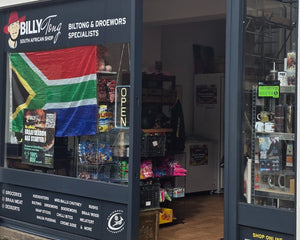
You can find biltong in specialist South African shops, some supermarkets, and online. For award-winning, traditionally air-dried biltong delivered anywhere in the UK, visit billytong.com. If you’re in Surrey, you can also visit our shop in Cobham.
Ready to Try Biltong for the First Time?
There’s only so much a guide can tell you. The best way to understand biltong is to taste it. Explore Billy Tong’s premium biltong collection — award-winning, traditionally air-dried, and delivered to your door anywhere in the UK. Shop now at billytong.com
Not sure where to start? Our Original Biltong is the perfect introduction — classic coriander-and-pepper seasoning on premium silverside beef, available in wet, medium, or dry.
Prefer something with more kick? Try our Chilli Biltong or Peri-Peri Biltong for a flavour upgrade.
Want the full South African experience? Browse our droëwors, boerewors, and South African grocery range — everything you need to bring a taste of the Rainbow Nation to your kitchen.