If you’ve fallen in love with biltong, sooner or later the thought crosses your mind: could I just make this myself?
It’s a perfectly reasonable question. The ingredient list is short — beef, vinegar, salt, coriander, pepper. The process sounds simple — season the meat and hang it up to dry. And there’s no shortage of YouTube videos, Reddit threads, and DIY biltong forums telling you it’s easy. So why not save a few quid and do it in your garage?
The honest answer is: yes, you can make biltong at home. People do it all the time, and some of them produce decent results. But “decent” and “consistently excellent” are two very different things. And when you factor in the real costs, the real risks, and the real challenges that the DIY community doesn’t always talk about, the picture gets more complicated than those YouTube thumbnails suggest.
In this guide, we’ll give you the full, unvarnished truth. We’ll walk you through what you need to make biltong at home, the step-by-step process, the genuine challenges you’ll face, the food safety risks you need to take seriously, the hidden costs that add up, and — honestly — why the biltong you buy from a dedicated producer like Billy Tong is almost certainly going to be better than what comes out of your spare room. No gatekeeping, no condescension — just the facts so you can decide for yourself.
What You Need to Make Biltong at Home
Before you start, here’s what a basic home biltong setup looks like:
The Drying Box
This is the big one. You need an enclosed space with controlled airflow where the meat can hang for several days. Most home biltong makers use one of three options:
A DIY biltong box. The classic approach. You take a large plastic storage box or wooden crate, drill holes for ventilation, install a small computer fan or desk fan to circulate air, and fit hooks or dowel rods inside to hang the meat. Some people add a low-wattage light bulb for gentle warmth in colder months. There are dozens of tutorials online, and the materials typically cost £20–£60.
A purpose-built home biltong dryer. Commercial home dryers are available in the UK, ranging from around £80 to over £200. These are essentially purpose-designed versions of the DIY box, with built-in fans, adjustable airflow, and sometimes temperature controls. They’re more convenient but add significant upfront cost.
A converted cupboard or wardrobe. Some enthusiasts convert an old wardrobe, kitchen cupboard, or even a section of a shed into a drying space. This gives you more hanging capacity but requires more effort to set up proper ventilation.
The Ingredients
The ingredient list itself is simple and inexpensive:
Beef. You need a good-quality cut — silverside or topside are the traditional choices. You’ll want thick pieces, ideally 2–4 cm, cut along the grain. Sourcing the right cut at the right thickness from a UK supermarket can be tricky — you may need to visit a butcher and ask them to prepare it specifically.
Vinegar. Malt vinegar or cider vinegar. Widely available and cheap.
Coarse salt. Not table salt — you want coarse or flaked salt that distributes evenly without over-salting.
Cracked black pepper. Freshly cracked is best.
Ground coriander. Toasted and ground whole coriander seeds give the best flavour, though pre-ground works in a pinch.
Other Equipment
Hooks or rods to hang the meat inside your drying box.
A sharp knife for trimming and slicing the beef.
Paper towels for patting the meat dry after the vinegar bath.
A clean workspace — hygiene matters enormously when you’re making a product that won’t be cooked.
The Basic DIY Process: Step by Step
If you’re determined to have a go, here’s a simplified overview of how the home process works.
Step 1: Prepare the Beef
Trim the silverside or topside of any excess fat or sinew (leave a thin layer of fat if you like — it adds flavour). Cut the meat into thick strips, roughly 2–4 cm wide, following the grain of the muscle.
Step 2: The Vinegar Bath
Dip or generously splash each strip in vinegar. Some people soak the strips for 15–30 minutes; others just give them a thorough coating. The vinegar helps preserve the meat and gives biltong its characteristic tang.
Step 3: Season
Mix your dry spice blend — coarse salt, cracked pepper, and ground coriander — and coat each strip generously on all sides. Press the spices into the surface so they adhere properly. Some recipes add a pinch of brown sugar or bicarbonate of soda.
Step 4: Hang and Dry
Thread hooks through the top of each strip (or drape them over rods) and hang them inside your drying box. Turn on the fan to start air circulating. Close the box and leave it. The meat will dry over the next three to seven days depending on thickness, airflow, and how dry you want the finished product.
Step 5: Check, Slice, and Enjoy
Check the biltong daily by gently squeezing the strips. Soft and yielding means wet; firm with a slight give means medium; hard means dry. Once it reaches your preferred texture, remove it, slice it up, and enjoy.
That’s the process in a nutshell. Sounds straightforward, doesn’t it? And in theory, it is. But here’s where the honest part of this guide comes in.
The Real Challenges of Making Biltong at Home
The DIY biltong community is enthusiastic and generous with advice, but there are several genuine challenges that tutorials and forums tend to gloss over. Here’s what you’re really up against:
1. Controlling the Drying Environment
This is the single biggest challenge, and it’s the reason professional producers invest in purpose-built drying rooms. To dry biltong safely and consistently, you need the right balance of temperature, humidity, and airflow — and that balance is much harder to achieve in a plastic box in your kitchen than in a controlled commercial environment.
Temperature. Too warm and bacteria can multiply before the meat dries. Too cold and the drying stalls. British homes vary wildly in temperature depending on the season, the room, and whether the heating is on. A kitchen that’s perfect in October might be too warm in July.
Humidity. Too humid and the meat won’t dry properly (or worse, it develops mould). Too dry and the outer surface dries too fast, forming a hard crust that traps moisture inside — a defect called “case hardening.” UK humidity levels fluctuate significantly by season and geography.
Airflow. A single small fan in a box creates uneven airflow. Strips at the front dry faster than strips at the back. Strips at the top dry differently from strips at the bottom. Rotating the meat helps, but it’s tedious and imprecise.
2. Food Safety Risks
This is the one that really matters. Biltong is an uncooked meat product. You’re relying entirely on the vinegar cure, salt, and controlled drying to prevent harmful bacteria from developing. In a professional environment with monitored conditions, this works perfectly and has done for over 400 years. In a home setup with inconsistent temperatures and no humidity controls, the margin for error is much thinner.
The specific risks include mould growth (which can appear as fuzzy white, green, or black patches on the surface), bacterial contamination (if the meat doesn’t dry fast enough in warm, humid conditions), and case hardening (where the outside dries but the inside stays moist and potentially unsafe). None of these are guaranteed to happen, but all of them can happen in an uncontrolled home environment.
We’re not saying this to scare you off — plenty of people make safe biltong at home. But food safety should be taken seriously, not treated as an afterthought.
3. Sourcing the Right Beef
Finding properly trimmed silverside or topside at the right thickness isn’t always easy. Supermarket cuts are often too thin, too fatty, or cut against the grain. You’ll likely need to find a good butcher who can prepare the meat to your specifications — and that adds cost and inconvenience.
4. Consistency Is Difficult
Even if your first batch turns out well, repeating that result is another challenge. Every batch of beef is slightly different. The weather changes. Your drying box performs differently in summer versus winter. Professional producers control these variables with precision equipment and years of experience. Home setups are inherently inconsistent.
5. The Time and Effort
From sourcing the beef, preparing the meat, building or maintaining the drying box, monitoring the drying process daily, and cleaning everything properly afterwards, a batch of home biltong takes considerably more time and effort than most tutorials suggest. If your time has any value at all, this needs to factor into the cost equation.
The Hidden Costs of DIY Biltong
One of the main motivations for making biltong at home is saving money. But does it actually work out cheaper? Let’s break it down: (prices as on November 2025).
|
Cost Item
|
Typical Range
|
|
DIY biltong box materials (or commercial dryer)
|
£25–£200+
|
|
Quality silverside/topside (per kg, from butcher)
|
£10–£18
|
|
Vinegar, salt, spices (per batch)
|
£2–£5
|
|
Hooks, rods, and accessories
|
£5–£15
|
|
Electricity (fan running 3–7 days)
|
£3–£5
|
|
Butcher preparation fee (if applicable)
|
£0–£5
|
|
Failed batches (mould, over-drying, etc.)
|
Cost of wasted beef
|
Your first batch will cost more than any single pack of shop-bought biltong because of the setup costs. Over time, if everything goes well, the per-batch cost comes down. But factor in failed batches, wasted beef, and the value of your time, and the savings are much slimmer than they appear. Many home biltong makers report that it costs roughly the same per gram as buying from a good producer — sometimes more.
And none of this accounts for the quality gap. The biltong you make at home with a plastic box and a desk fan is unlikely to match what a dedicated producer achieves with purpose-built drying rooms, premium sourced beef, and years of expertise.
Homemade vs Professionally Made: An Honest Comparison
|
Factor
|
Homemade
|
Professional (Billy Tong)
|
|
Beef quality
|
Depends on your butcher; varies batch to batch
|
Premium silverside and topside, consistently sourced
|
|
Drying environment
|
DIY box with basic fan; uncontrolled temp and humidity
|
Purpose-built drying rooms with monitored conditions
|
|
Consistency
|
Varies between batches; trial and error
|
Consistent quality, flavour, and texture every time
|
|
Food safety
|
Relies on your setup and vigilance
|
Professional food safety standards and quality checks
|
|
Flavour
|
Can be good; hard to replicate consistently
|
Refined traditional recipe, perfected over years
|
|
Time investment
|
Several hours prep plus 3–7 days monitoring
|
Zero — ordered online, delivered to your door
|
|
Cost per gram
|
Moderate (after setup costs)
|
Competitive when you factor in quality and convenience
|
|
Upfront investment
|
£25–£200+ for equipment
|
None — pay per order
|
|
Risk of failure
|
Real — mould, case hardening, uneven drying
|
None — every batch is quality-checked before sale
|
|
Award-winning?
|
Unlikely (but we admire the ambition)
|
LUX Magazine Best Authentic Biltong Provider
|
Why Billy Tong’s Biltong Is Better Than Homemade (and We Say That Respectfully)
We’re not here to dismiss the DIY biltong community. Making your own biltong is a satisfying hobby, and there’s something genuinely rewarding about eating food you’ve made yourself. We respect anyone who takes the time to learn the craft.
But if your goal is simply to eat the best biltong available, as conveniently and reliably as possible, buying from a dedicated producer is the smarter choice. Here’s why:
We source premium beef every time. At Billy Tong, we use carefully selected silverside and topside — the same quality, every batch. The raw material is the single biggest factor in biltong quality, and we never compromise on it.
Our drying rooms are purpose-built. Temperature, humidity, and airflow are monitored and controlled throughout the drying process. This eliminates the guesswork and variability that home setups can’t avoid.
Every batch is quality-checked. Before any biltong reaches your door, it’s inspected for consistent colour, texture, aroma, and moisture level. If it doesn’t meet our standards, it doesn’t get packed.
Our recipe has been refined over years. The salt-pepper-coriander balance, the vinegar cure, the drying time — we’ve fine-tuned every element to deliver the best possible flavour. That kind of consistency comes from experience, not from following a YouTube tutorial.
We’ve been recognised for it. Billy Tong won the LUX Magazine award for Best Authentic Biltong Provider. Our biltong has been supplied to the Springboks rugby team. These aren’t credentials you earn by accident — they reflect a genuine commitment to quality.
It’s delivered to your door. No building drying boxes, no trips to the butcher, no monitoring fans for a week, no cleaning up. Just order online and your biltong arrives, ready to eat. Time is valuable, and convenience is a legitimate benefit.
When Making Biltong at Home Does Make Sense
In the spirit of honesty, there are a few situations where DIY biltong genuinely makes sense:
You enjoy it as a hobby. If you find the process itself satisfying — building the box, tweaking the recipe, experimenting with different cuts and spice blends — then the enjoyment is its own reward. Many home biltong makers are craftspeople at heart, and the journey matters as much as the destination.
You want total control over ingredients. If you have very specific dietary requirements or preferences (an unusual spice blend, a particular cut of beef, no salt at all), making your own lets you customise every element.
You’re making it in bulk for events. If you’re hosting a braai for 50 people and want to prepare biltong as a talking point, the DIY approach can be a fun centrepiece activity. (Though for that volume, you might want to chat to us about our wholesale and catering options.)
You’re a South African expat feeling nostalgic. For many South Africans in the UK, making biltong at home is a way to connect with heritage, recreate the smells and rituals of home, and share the tradition with British friends. That emotional value is real and worth acknowledging.
Frequently Asked Questions
Can you make biltong at home?
Yes. With a basic drying box (or a purpose-built home dryer), quality beef, vinegar, and the right spices, you can make biltong at home. The process is straightforward in concept, but achieving consistent, safe, high-quality results requires careful attention to airflow, humidity, temperature, and hygiene.
Is homemade biltong safe?
It can be, but food safety is a genuine concern with home setups. Biltong is an uncooked product that relies on vinegar-curing, salt, and controlled drying to prevent bacterial growth. In a professional environment with monitored conditions, this is very safe. At home, inconsistent temperatures and humidity create a higher risk of mould or bacterial issues. Strict hygiene, proper ventilation, and careful monitoring are essential.
How long does it take to make biltong at home?
The drying process takes three to seven days, depending on the thickness of the strips, your drying setup, and how dry you want the finished product. Add an hour or so for meat preparation, seasoning, and setup on day one.
What equipment do I need to make biltong at home?
At minimum, you need a drying box (DIY or bought), a small fan for airflow, hooks or rods to hang the meat, a sharp knife, quality beef (silverside or topside), vinegar, coarse salt, cracked black pepper, and ground coriander. A purpose-built home biltong dryer is more convenient but costs £80–£200+.
Is it cheaper to make biltong at home?
Slightly, after you’ve absorbed the upfront equipment costs and assuming no failed batches. But when you factor in time, effort, inconsistency, the risk of wasted beef, and the quality gap versus a professional producer, the real-world savings are modest. Many home makers report costs comparable to buying from a good biltong brand.
What’s the biggest risk of making biltong at home?
Mould and case hardening. Mould can develop if humidity is too high or airflow is insufficient. Case hardening occurs when the outside of the meat dries too fast and forms a hard crust, trapping moisture inside where bacteria can grow. Both can be avoided with proper ventilation and a well-designed drying setup, but they’re common problems for beginners.
Can I make biltong without a drying box?
It’s possible but not recommended. Some people hang meat in a well-ventilated room, a garage, or even outdoors in dry weather, but without a controlled enclosure you have very little control over airflow, temperature, and humidity — and you’re exposed to dust, insects, and other contaminants. A drying box is a small investment that significantly improves safety and consistency.
Where can I buy a biltong drying box in the UK?
Purpose-built home biltong dryers are available from several UK-based retailers and Amazon. Alternatively, you can build your own from a plastic storage box, a fan, and some hooks — there are plenty of DIY tutorials available online. If you’d rather skip the DIY entirely and just eat great biltong, we’re always here at billytong.com.
Or You Could Just Let Us Do It
We admire anyone who takes on the biltong-making challenge. But if you’d rather spend your time eating great biltong instead of building boxes and babysitting fans, we’ve got you covered.
Explore Billy Tong’s premium biltong collection — award-winning, traditionally air-dried in purpose-built drying rooms, quality-checked by hand, and delivered to your door anywhere in the UK. Shop now at billytong.com
Start with our Original Biltong for the classic South African flavour — premium silverside, vinegar-cured, seasoned with coriander and pepper, and dried to perfection. Available in wet, medium, or dry.
Want variety? Try our Kalahari Biltong, Smoked Paprika Biltong, or Spicy Chutney Biltong — flavours that have been refined over years, not guessed at from a Reddit recipe.
Feeding a crowd? Ask us about our Value Bundles and wholesale and catering options — we can supply biltong for events, offices, and businesses across the UK.
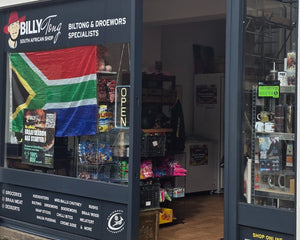
In Surrey? Visit our shop in Cobham and taste the difference that professional craftsmanship makes. You can even see the drying rooms and chat with the team.